Beyond Full-Time: Why Flexible Workforce Models Are Reshaping Finance and Legal in the Caribbean

The offshore finance and legal sectors have long operated on a predictable model: full-time positions, permanent hires, and traditional employment relationships. But that world is changing.
Over the past eighteen months, we’ve witnessed a fundamental shift in how organizations in the Cayman Islands, Bermuda, and other offshore hubs approach recruitment and talent management. Full-time roles remain essential, but they’re no longer the only or always the best solution. Fractional roles, temporary assignments, and hybrid employment arrangements are moving from the margins of the recruitment industry into the mainstream, fundamentally reshaping how finance and legal professionals build their careers and how firms access specialized talent.
This isn’t a temporary response to economic uncertainty. It’s a structural transformation that’s redefining what recruitment means in 2026.
The Shift: From Permanent to Flexible
For over two decades, Affinity has watched the recruitment landscape evolve in our markets. We’ve placed candidates in full-time roles at top law firms, advisory boutiques, and global financial institutions. And we continue to do exactly that. But what we’re seeing now is something different a deliberate expansion beyond the traditional employment model.
The data is striking. Global surveys reveal that 71% of executives and founders say fractional talent offers greater agility during economic uncertainty. More than half of talent acquisition leaders are actively planning to recruit autonomous AI agents and flexible workers alongside permanent staff. And across the finance and legal sectors specifically, temporary roles and fractional positions are no longer perceived as “lesser than” full-time opportunities they’re strategic workforce components.
Why? Three converging forces:
First, cost discipline. In an environment where economic uncertainty persists and talent costs continue rising, organizations are questioning whether every role justifies a permanent salary. A boutique fund administrator in the Cayman Islands might need compliance expertise for a six-month regulatory implementation project, but a full-time hire makes little financial sense. A temporary role fills the gap intelligently.
Second, access to expertise. The best legal minds and finance professionals increasingly prefer flexibility. They might want to build a portfolio of clients, work across multiple jurisdictions, or maintain better work-life balance. Part-time arrangements and fractional roles allow firms to access world-class talent they couldn’t hire full-time, and allow talented professionals the autonomy they’re seeking.
Third, agility. Whether it’s responding to market shifts, managing peak workloads, or executing specialized projects, organizations need the ability to scale expertise up and down quickly. In Bermuda’s insurance sector or Cayman’s fund administration space, that agility is competitive advantage.
The Recruitment Industry Response
The recruitment industry itself is evolving to support this shift. What was once a niche practice placing fractional executives or temporary professionals is becoming core business. Leading firms are building new service lines around flexible talent, and technology is enabling it all. Platforms are emerging that make part-time and fractional work easier to manage, candidates easier to find, and contracts easier to structure.
For recruitment firms like Affinity, this evolution represents both opportunity and obligation. Here’s where our two decades of experience matter profoundly.
Cayman Islands and Bermuda: The Immigration Dimension
This is where our role extends beyond traditional recruitment into something deeper: strategic partnership.
When a firm in the Cayman Islands wants to bring in a world-class part-time CFO from London, or when a Bermuda law firm wants to engage a fractional legal director from the BVI, immigration and work authorization become immediately complex. Each arrangement carries different compliance requirements. A three-month temporary role has different visa pathways than a full-time permanent position. Part-time and fractional arrangements create questions that standard recruitment processes don’t address.
Similarly, in the legal sector where both jurisdictions have seen explosive growth in digital assets, fund structuring, and cross-border transactions the ability to quickly access specialized talent, whether through full-time, part-time, or temporary arrangements, is increasingly critical to competitive advantage.
We’ve spent twenty-plus years building expertise in exactly these intersections: recruitment and immigration, full-time and flexible arrangements, onshore and offshore talent for finance and legal sectors. When a client asks us, “Can we bring in a fractional compliance consultant for six months?” we don’t just help you find the right person. We navigate the work authorization pathway, structure the arrangement correctly, and ensure every part of the process complies with current regulations.
That’s not traditional recruitment. That’s partnership.
How Organizations Are Using Flexible Roles
Let’s get specific. How are finance and legal organizations actually deploying temporary roles and fractional arrangements?
In Finance:
- Compliance and Risk: A fund administrator in Cayman needs specialized VASP (Virtual Asset Service Provider) compliance expertise for a regulatory update. A fractional consultant working 3 days per week for 6 months brings cutting-edge knowledge without permanent headcount.
- Fund Administration: Seasonal volume spikes require temporary support during fiscal closes and reporting periods. Rather than hiring permanent staff for cyclical work, organizations engage temporary professionals.
- IT Audit and Analytics: Data transformation projects require temporary specialized expertise often filled by professionals splitting time across multiple clients.
In Legal:
- Project-Based Work: Complex transactions fund formations, cross-border restructurings, digital asset licensing often require concentrated expertise for a defined period. Temporary roles are natural fit.
- Sector Expertise: When a firm needs specialized knowledge in an emerging area (crypto regulation, ESG compliance), fractional partners bring deep expertise on a flexible basis.
- Knowledge Transfer: Rather than hiring permanently, firms engage experienced practitioners on part-time bases to mentor internal teams during transformations.
What This Means for Employers
If you’re an employer in finance or legal in the Cayman Islands or Bermuda, the message is clear: flexible workforce models are no longer experimental. They’re core strategy.
Consider: Do you have seasonal or project-based work that currently stretches permanent staff? A temporary professional solves it. Do you need specialized expertise in an area where full-time hiring doesn’t justify the cost? A fractional arrangement could be perfect. Are you trying to access talent you can’t find locally? Flexible arrangements combined with the right immigration expertise can unlock possibilities you hadn’t considered.
The right recruitment partner helps you think through these questions, map them to your actual business needs, and execute them compliantly and effectively.
The Practical Starting Point
If you’re considering flexible workforce models or if you already are here’s where to start:
- Audit your actual needs: Where do you have seasonal, cyclical, or project-based work? Where do you need specialized expertise for a defined period? Where is permanent full-time hiring over-staffing your real needs?
- Consider your culture and integration: Flexible professionals need thoughtful management and cultural integration. Are you ready to treat temporary and fractional team members as genuine team members?
- Map regulatory requirements: Especially in markets like Cayman Islands and Bermuda, understand the specific visa,and employment requirements for different arrangement types.
- Partner with specialists: Don’t navigate this alone. Work with recruitment partners who genuinely understand both your market and the full spectrum of workforce options.
- Start with one arrangement: Build expertise with one temporary or fractional hire before restructuring your entire approach.
The firms getting this right aren’t abandoning full-time hiring. They’re being smarter about when, where, and how to use it. And they’re accessing talent they couldn’t reach before.
The Affinity Difference
For over twenty years, Affinity has been more than a traditional recruitment agency. We’ve understood that in markets like the Cayman Islands and Bermuda, recruitment and immigration are inseparable. We’ve built deep expertise in finance and legal sectors where regulatory precision matters. We’ve developed the relationships, market knowledge, and strategic perspective to help organizations think beyond the obvious.
This shift toward flexible workforce models is exactly where that expertise matters most. Whether you’re hiring full-time, part-time, or temporary professionals, whether you need compliance expertise, legal talent, financial specialists, or sector-specific roles we combine genuine market knowledge with immigration expertise and strategic perspective.
We don’t just fill positions. We help you build teams that work in your specific context, navigate your specific regulations, and achieve your specific goals.
Ready to think differently about your workforce? Let’s talk about how flexible talent models could work in your organization.
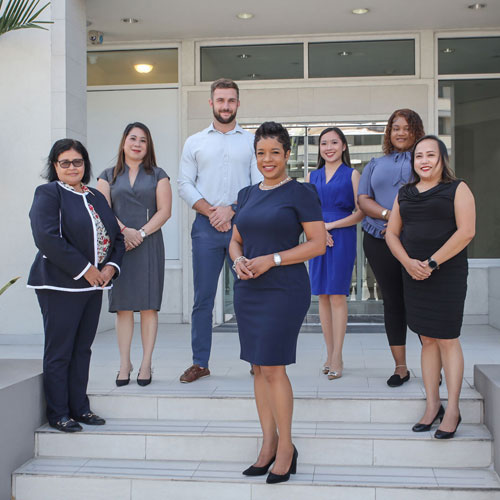
This blog post is a collaborative effort by the team at Affinity Cayman, drawing on our collective expertise and insights to bring you the latest trends and skills for 2024. Together, we strive to provide valuable knowledge to help you succeed in an ever-evolving recruitment landscape.